Rolex spent decades sorting its watches into men's and women's categories, but the way people actually buy them has moved on. The deciding factors now are wrist size, proportions, function, and personal taste, not whether a catalog labels a reference to a man's watch or a woman's watch.
That shift is why unisex Rolex watches have become such a common request.
Rolex rarely uses the word "unisex" itself. Instead, the brand offers a wide spread of case sizes, materials, dial layouts, complications, and bracelets, so the same Rolex family can suit very different wrists and very different styles.
For most buyers, the sweet spot sits between the 31mm, 34mm, 36mm, 37mm, and 40mm models. These sizes carry the presence of a luxury sports or dress watch without tipping into oversized or overly delicate territory.
So which are the best unisex Rolex watches, and how do you land on the right size? This guide walks through the strongest midsize models, explains how Rolex sizing has changed, and covers what to check before you buy.
What Makes a Rolex "Unisex"?
A unisex Rolex is simply a model whose size, proportions, and design read well on a range of wrists, regardless of gender. Rather than hunting for an official label, look at the watch itself:
1. Case diameter
2. Lug-to-lug length
3. Your own wrist circumference
4. Case thickness
5. Bracelet style
6. Dial colour
7. Bezel design
8. Case and bracelet material
9. Intended function
10. Your personal wearing preference
In practice, Rolex watches from 31mm to 40mm cover the most flexible part of the catalog. That range is a starting point, not a fence. A 41mm Datejust can look perfectly balanced on one person, while a 36mm Day-Date gives another exactly the presence they want. Wearability and styling decide whether a watch feels unisex, not the marketing category it sits in.
Traits of a Versatile Unisex Rolex
The most adaptable pieces tend to share a few things: a balanced case diameter, proportions that suit many wrist sizes, a choice of dials and bracelets, styling that works dressed up or down, and the same movement quality found across the wider Rolex range.
The current catalog is built for this kind of flexibility. Rolex lets you filter by size, from small through midsize to larger cases, so your decision never has to start and end with gender.
Men's vs Women's Rolex: Does the Line Still Matter?

For years, Rolex collections followed familiar conventions: smaller watches were pitched to women, larger ones to men. That split has loosened as buyers pick pieces on proportion and design instead of gender.
The catch with the old framing is that most modern Rolex families now span several sizes, so grouping an entire family as "men's" or "women's" no longer holds up. The Datejust, Oyster Perpetual, and Day-Date all come in cases that suit smaller and larger wrists alike. A more useful way to think about it is by the specific size and reference, not the family name.
Sizes that lean larger or sportier
-
Submariner (41mm)
-
Sea-Dweller (43mm)
-
GMT-Master II (40mm)
-
Cosmograph Daytona (40mm)
-
Explorer II (42mm)
-
Yacht-Master (42mm)
-
Datejust 41
-
Day-Date 40
Sizes that lean smaller or midsize
-
Lady-Datejust (28mm)
-
Datejust 31 and Datejust 36
-
Oyster Perpetual 28, 31, 34, and 36
-
Day-Date 36
-
Yacht-Master 37
-
Explorer (36mm)
-
Land-Dweller 36
None of this is a rule. A woman can wear a 40mm Daytona or a 41mm Submariner, and a man can wear a 31mm Datejust or a 36mm Oyster Perpetual. The right choice comes down to how the watch sits on your wrist, suits your personality, and matches the look you are after.
Rolex Case Sizes and How They Actually Wear
Case diameter is the easiest place to begin, but the number on the spec sheet only tells part of the story.
A 40mm sports watch with a wide bezel and a bold case wears very differently from a 40mm dress watch. Lug shape, bracelet width, thickness, dial colour, and bezel design all change how big a watch looks on the wrist.
Rolex Size Guide
|
Rolex case size |
Typical wearing character |
Unisex potential |
|---|---|---|
|
28mm |
Refined and understated |
High for smaller wrists |
|
31mm |
Compact and versatile |
Very high |
|
34mm |
Classic, vintage-inspired proportion |
Very high |
|
36mm |
Balanced and timeless |
Excellent |
|
37mm |
Sporty midsize proportion |
Excellent |
|
40mm |
Stronger wrist presence |
Excellent |
|
41mm |
Contemporary and substantial |
High |
|
42mm and up |
Larger and more prominent |
Depends on wrist and model |
For a lot of buyers, 36mm is the classic middle ground: noticeable enough to feel substantial, yet true to the proportions that defined generations of Rolex watches. At the same time, 31mm, 34mm, and 37mm models have become popular with people who want a slightly smaller footprint without giving up presence or function.
A More Inclusive Rolex Catalog than Ever
Today's Rolex lineup reflects a real change in how luxury watches are worn. No single case diameter reads as a stand-in for gender anymore, and buyers pick from a spread of sizes across familiar families.
The Datejust is the clearest example. Rolex offers it in 31mm, 36mm, and 41mm cases. Current Datejust 31 models pair a 31mm Oyster case with options such as Oystersteel, Rolesor, a variety of dials, and either an Oyster or a Jubilee bracelet. The Datejust first launched in 1945 as the first self-winding, waterproof chronometer to show the date in a window at 3 o'clock, and it has kept that versatile character ever since.
The Oyster Perpetual follows the same idea. It comes in 28mm, 31mm, 34mm, 36mm, and 41mm cases, giving buyers room to match proportion to wrist and taste. That breadth is a big part of why so many Rolex models work as unisex watches.
The Best Unisex Rolex Watches

There is no single "best" unisex Rolex. The right model depends on whether you value everyday flexibility, dress-watch elegance, sportiness, collectibility, or quiet luxury. The pieces below are among the strongest choices for a Rolex that reads well across wrists and styles.
1. Rolex Datejust 31 and Datejust 36
The Datejust is the natural starting point for anyone after a versatile unisex Rolex. A round case, a date display, the Oyster construction, and a broad choice of dials and bracelets make it one of the most adaptable families Rolex builds.
The Datejust 31 gives a compact but clearly visible presence, while the Datejust 36 sits in one of the most recognised wearable proportions in Rolex history. The 36mm suits buyers who want a traditional Rolex silhouette without moving into the larger sports cases. The 31mm suits anyone who prefers something snugger, with plenty of bracelet, dial, and bezel choices to personalise it.
Price guide: steel and Rolesor Datejust 31 and 36 models run from roughly $7,500 to $16,000 at retail depending on dial, bezel, and bracelet, with pre-owned steel examples often available from about $5,500 to $8,000. Diamond-set and precious-metal versions climb well beyond that.
Recommended for:
-
Everyday luxury wear
-
Couples who want matching or complementary watches
-
Buyers who need dress-and-casual flexibility
-
Smaller to medium wrists
-
First-time Rolex buyers
Takeaway: if you want one Rolex that moves from a weekend to a boardroom without missing a beat, the Datejust is the strongest place to start.
2. Rolex Oyster Perpetual 31, 34, and 36
If clean design matters to you more than complications, the Oyster Perpetual deserves a serious look. It strips away the extras: no date window, no Cyclops lens, no rotating bezel. Attention stays on the dial, the bracelet, the case, and the Oyster architecture itself. That simplicity is exactly what gives it such broad unisex appeal.
The 31mm, 34mm, and 36mm sizes work well for buyers who want a contemporary Rolex that never looks oversized. The 36mm in particular bridges the gap between the smaller and larger cases. Dial colour changes the character completely: a black or silver dial feels restrained and traditional, while a brighter tone turns the same watch into something expressive. You can see the full spread across the Oyster Perpetual collection.
Price guide: current Oyster Perpetual retail prices sit around $6,300 for the 31mm, $6,400 for the 34mm, and $6,750 for the 36mm. On the secondary market, expect roughly $5,000 to $14,000, with discontinued colour dials such as turquoise or coral commanding a steep premium.
Recommended for:
-
First-time luxury watch buyers
-
Daily wear
-
Anyone drawn to minimalist design
-
Buyers who love a strong dial colour
Takeaway: for an unmistakable Rolex look at the most accessible entry point, the Oyster Perpetual is one of the most naturally unisex choices in the catalog.
3. Rolex Day-Date 36
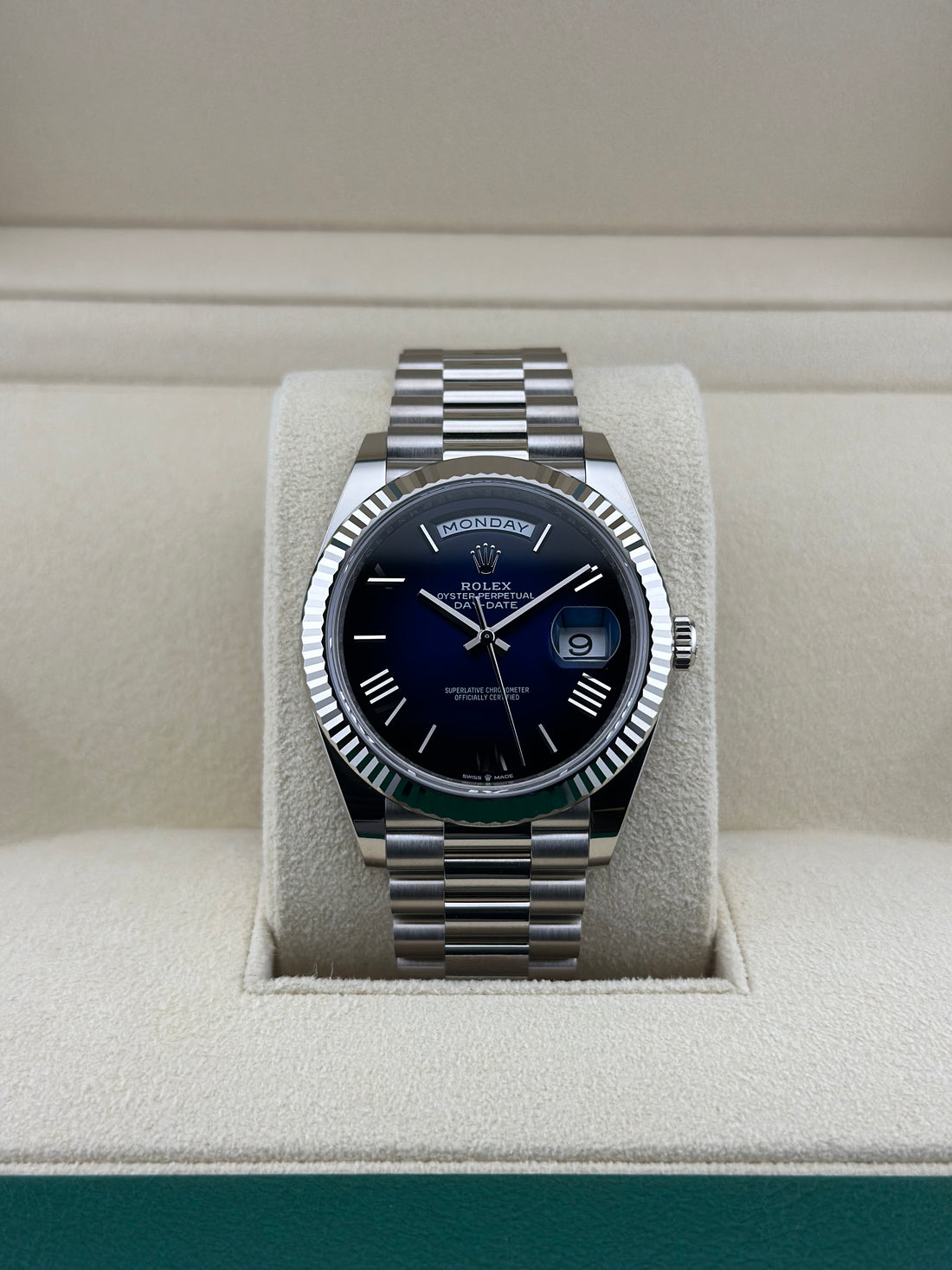
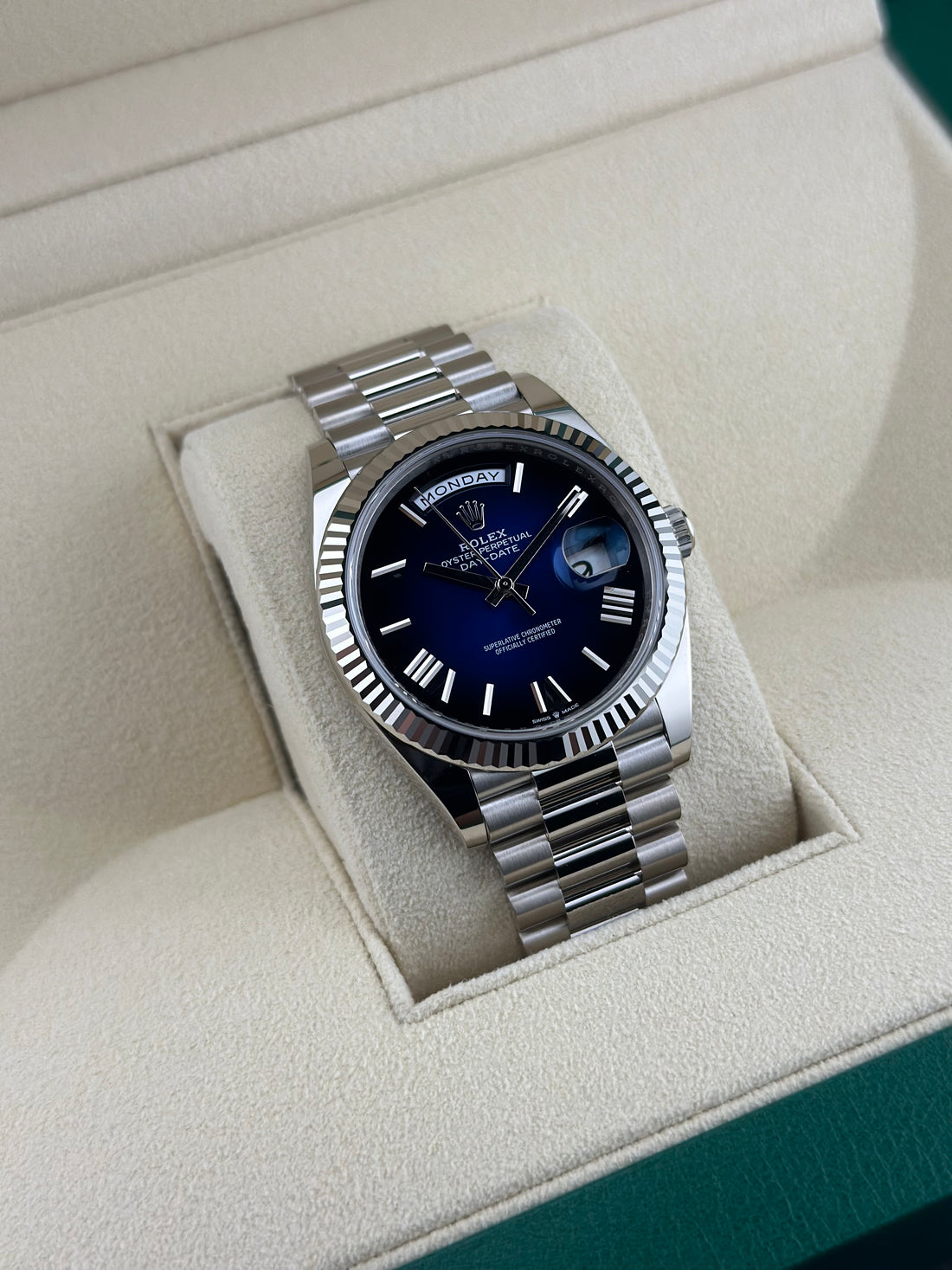
The Day-Date 36 takes a formal Rolex and makes it surprisingly versatile. The 36mm case is a design statement in its own right, long tied to the model's classic proportions. It combines the day spelled out in full, a date window, precious-metal construction, and the President bracelet into one instantly recognisable package.
For decades this was the standard men's size. Today it looks just as convincing on a woman who wants real luxury presence, and on a man who prefers a refined case over the larger Day-Date 40.
Its appeal comes from proportion rather than novelty: 36mm is substantial enough to feel special while staying compact next to most modern sports watches. The Day-Date earned its "presidents' watch" nickname through the figures who have worn it since 1956, and that heritage still carries weight. You can compare configurations in the Day-Date collection.
Price guide: because the Day-Date is made only in gold or platinum, retail starts around $40,200 for yellow gold and about $43,500 for rose or white gold, climbing sharply for diamond-set and exotic-dial versions. Pre-owned examples of older references can be found for roughly $20,000.
Recommended for:
-
Formal occasions
-
Collectors
-
Precious-metal enthusiasts
-
Classic, dressy styling
-
Buyers who want the President look
Takeaway: for a unisex Rolex with clear prestige and traditional watchmaking character, the Day-Date 36 is hard to overlook.
4. Rolex Yacht-Master 37
The Yacht-Master 37 is one of the best examples of a sports watch scaled to suit a wide range of wrists. Rolex offers the Yacht-Master in 37mm, 40mm, and 42mm cases, with material combinations that change the personality of the same basic design.
The 37mm hits an interesting middle: it delivers the sporty look of the Yacht-Master without the footprint of a large tool watch. Pairings such as Oystersteel with Everose gold, or Oystersteel with platinum, shift its character from understated to eye-catching.
Price guide: the 37mm Rolesium (Oystersteel and platinum) reference retails from about $12,500, the two-tone Everose version from roughly $17,750, and solid-gold models cost considerably more. Secondary-market prices for the steel-and-platinum 37 tend to hover close to retail.
Recommended for:
-
Buyers who want a genuine sports Rolex
-
Smaller to medium wrists
-
Nautical-leaning styling
-
Anyone who finds 40mm sports watches a touch large
Takeaway: the Yacht-Master 37 gives you the elegance and robustness of a true Rolex sports watch in a more compact case.
5. Rolex Yacht-Master 40
Do not assume a 40mm case is automatically too big for smaller wrists. The Yacht-Master 40 is a good reminder to weigh design and proportion alongside diameter.
The 40mm reads as more assertive than the 37, yet it stays elegant rather than purely utilitarian. For anyone who wants a watch that works as both a luxury piece and a sports watch, and makes a stronger everyday statement, the 40 is the more confident option. Current examples come in combinations such as Oystersteel with platinum, or Oystersteel with Everose gold.
Price guide: the Rolesium Yacht-Master 40 retails from about $13,200, the two-tone Everose version from roughly $19,750, and the solid Everose gold model around $37,700. Older 40mm references can start near $8,500 pre-owned.
Recommended for:
-
Buyers who prefer stronger wrist presence
-
Sport-luxury styling
-
Medium to large wrists
-
Anyone who likes the Yacht-Master 37 but wants more visual impact
Takeaway: same nautical DNA as the 37, with a bolder footprint for those who want it.
6. Rolex Cosmograph Daytona
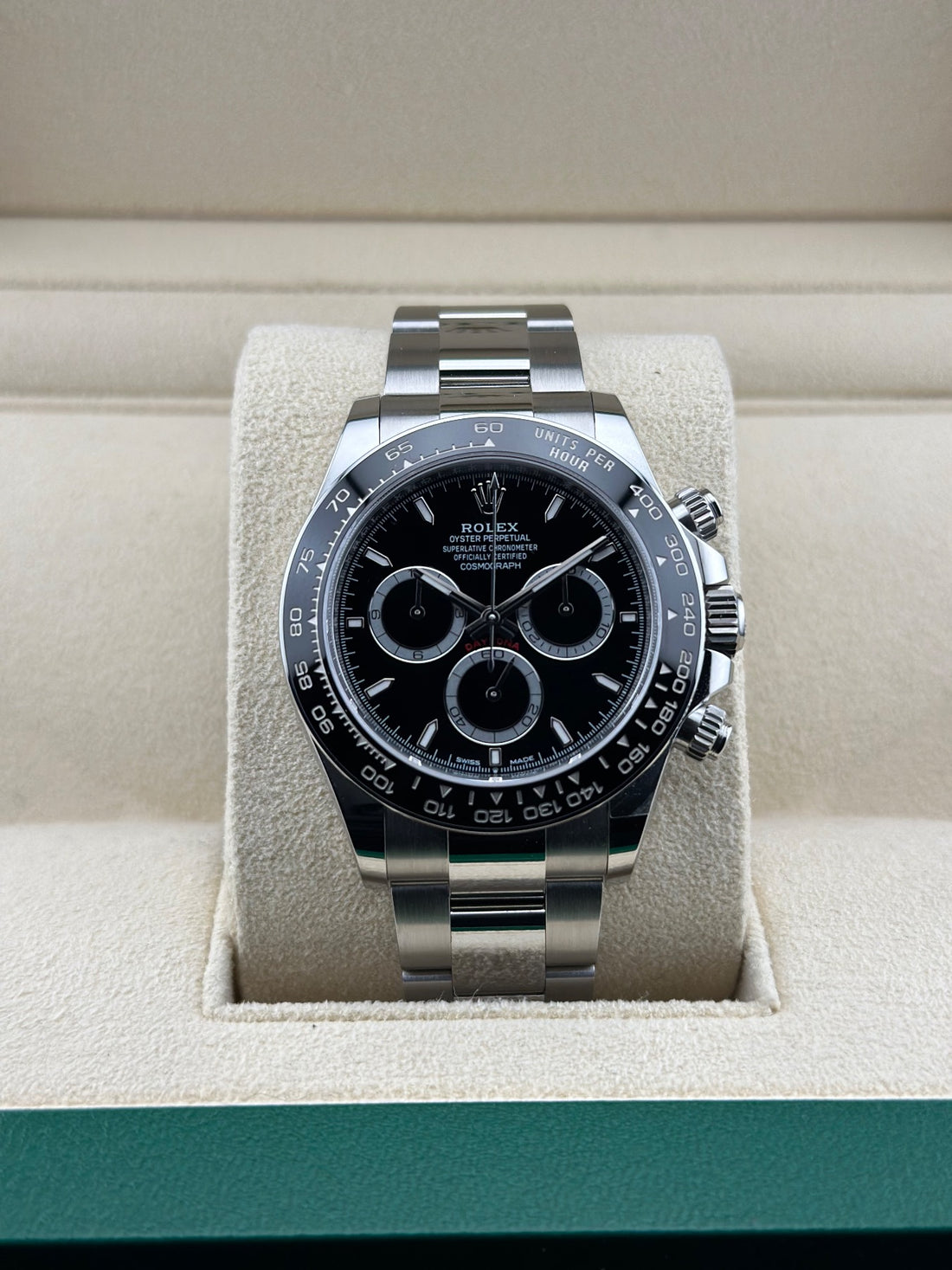
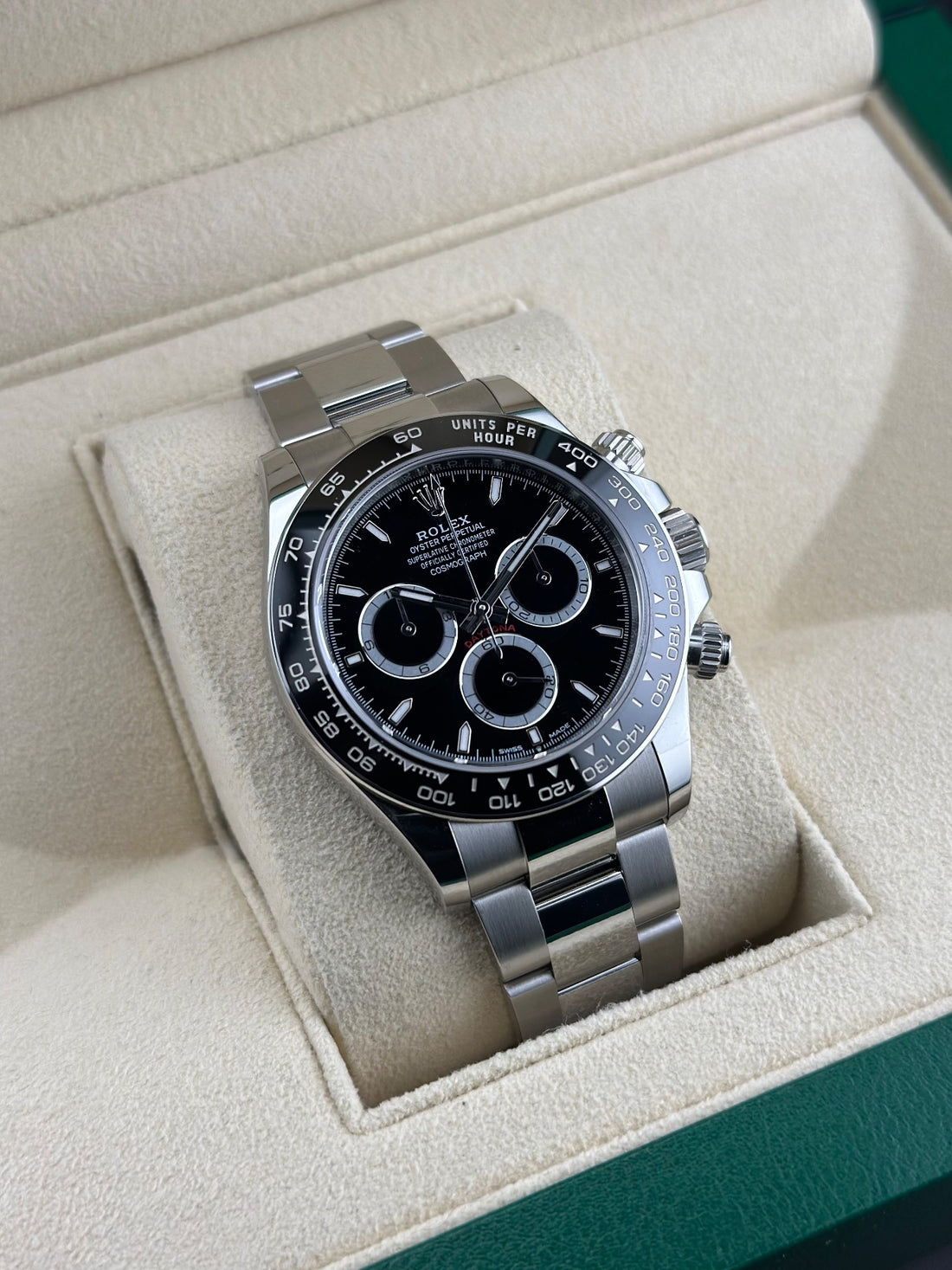
The Daytona never needed a women's version, which is part of why it became a unisex icon. Its motorsport heritage, chronograph function, 40mm case, and enormous collector following have made it desirable across every demographic.
The Daytona shows that pairing serious function with cultural weight matters more than any gender label. The 40mm chronograph can look sporty and substantial on one wrist and sleek and elegant on another.
The mix of 40mm proportions, chronograph complication, racing history, strong demand, a distinctive sub-dial layout, and a wide choice of metals and dials keeps it near the top of many wish lists.
Price guide: the steel Daytona retails around $16,100, but limited allocation means most buyers turn to the secondary market, where steel references typically trade between $19,000 and $35,000, and rare or vintage examples reach far higher.
Recommended for:
-
Collectors
-
Motorsport enthusiasts
-
Buyers who want a statement Rolex
-
Anyone drawn to chronographs
-
Long-term ownership
Takeaway: if your idea of a unisex Rolex leans toward a strong sports-watch identity, the Daytona belongs near the top of the list.
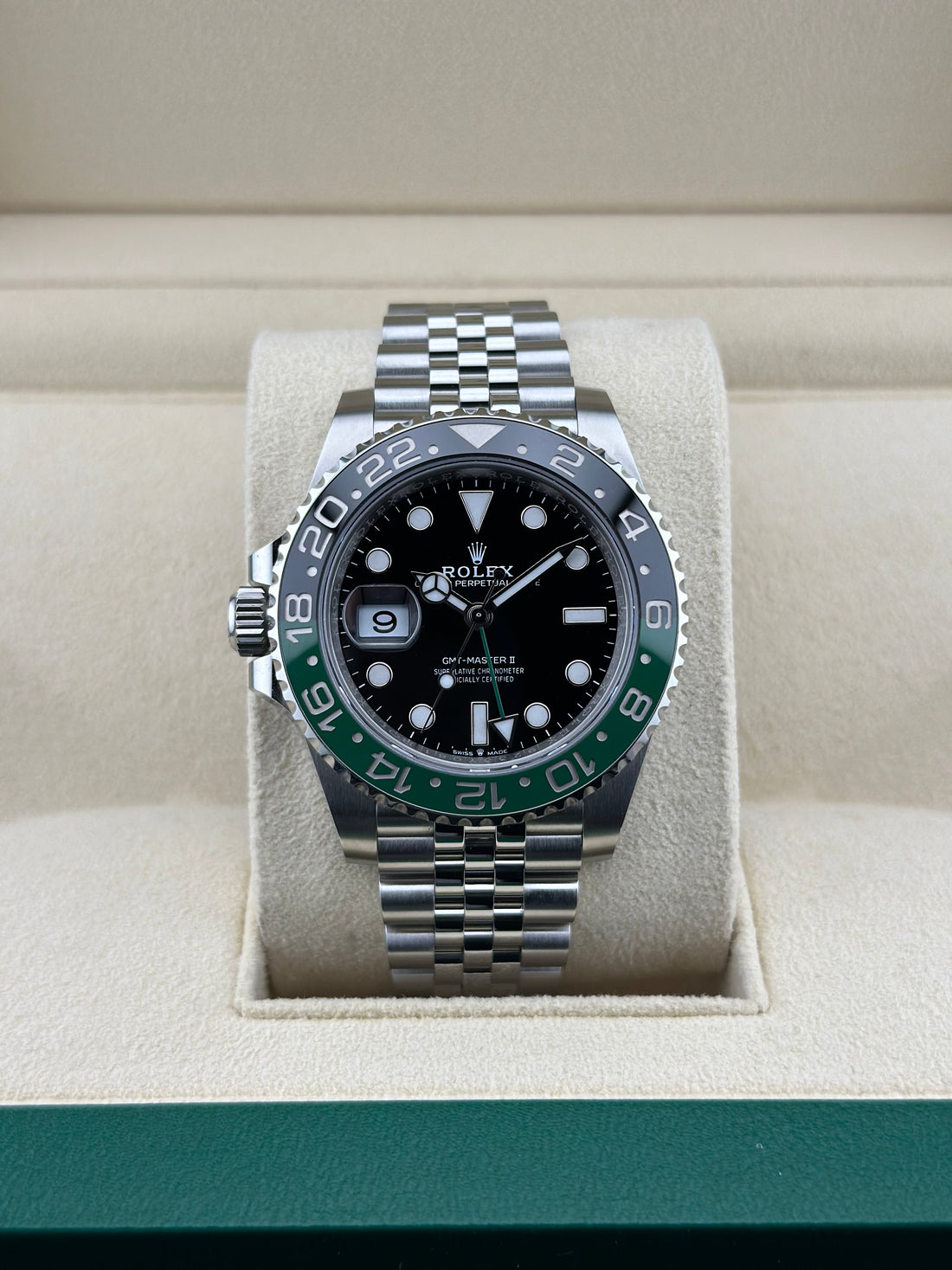
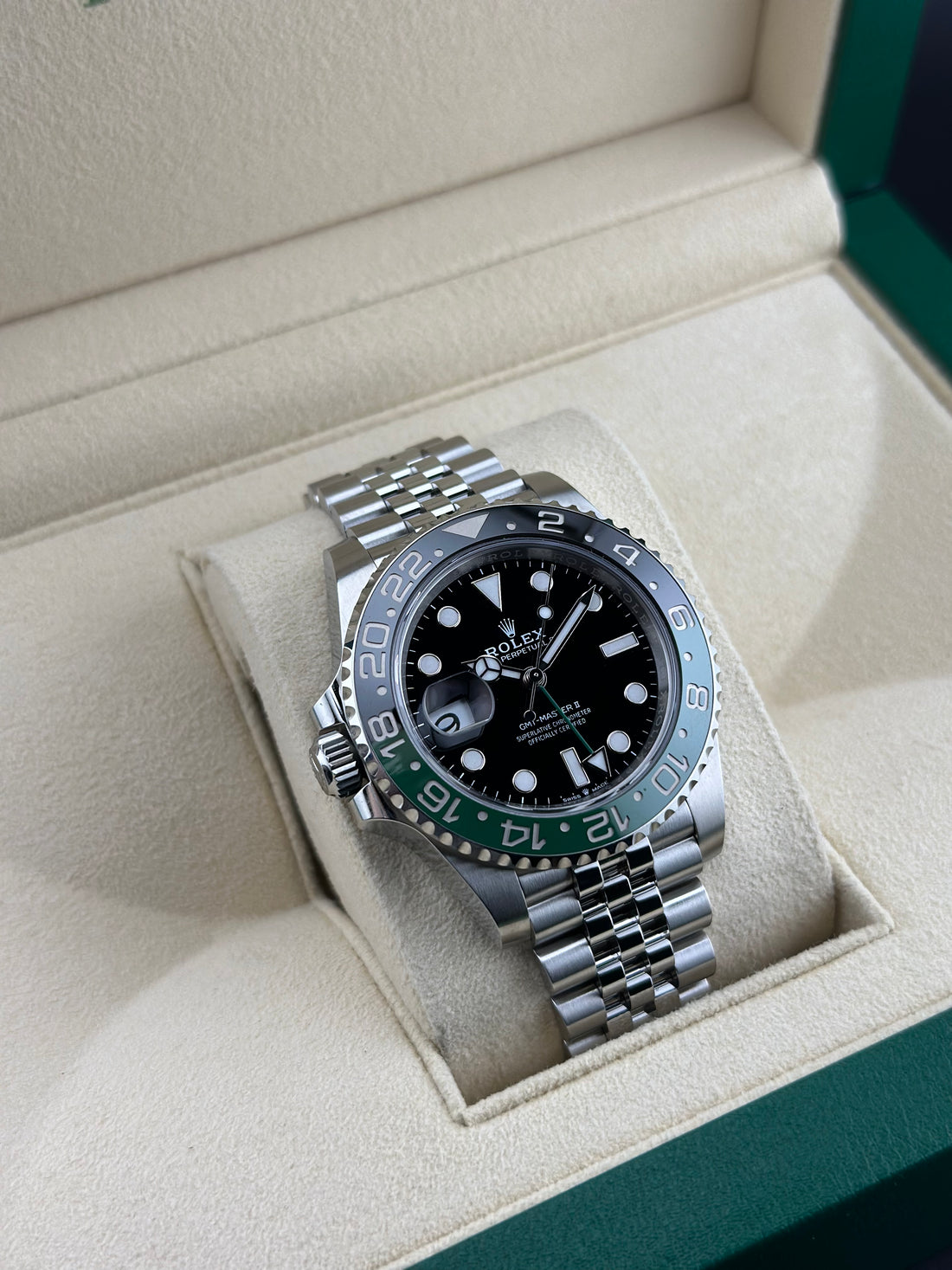
7. Rolex GMT-Master II
The GMT-Master II is another case study in how a traditionally masculine sports model can read as gender-neutral depending on styling and taste. Its 40mm case, 24-hour bezel, and travel function make it a favourite among collectors and frequent flyers.
Bezel colour changes the whole feel of the watch. A darker configuration keeps things understated, while a two-tone bezel becomes the centre of attention. Less about the men's or women's label, and more about travel function and a look that fits your lifestyle.
Price guide: steel GMT-Master II models retail from roughly $10,700 to $11,800, with popular references trading on the secondary market between about $14,000 and $20,000.
Recommended for:
-
Frequent travellers
-
Aviation enthusiasts
-
Collectors
-
Buyers who want a useful complication
-
Anyone after a sporty 40mm Rolex
Takeaway: a practical, characterful sports watch that suits a wide range of wrists.
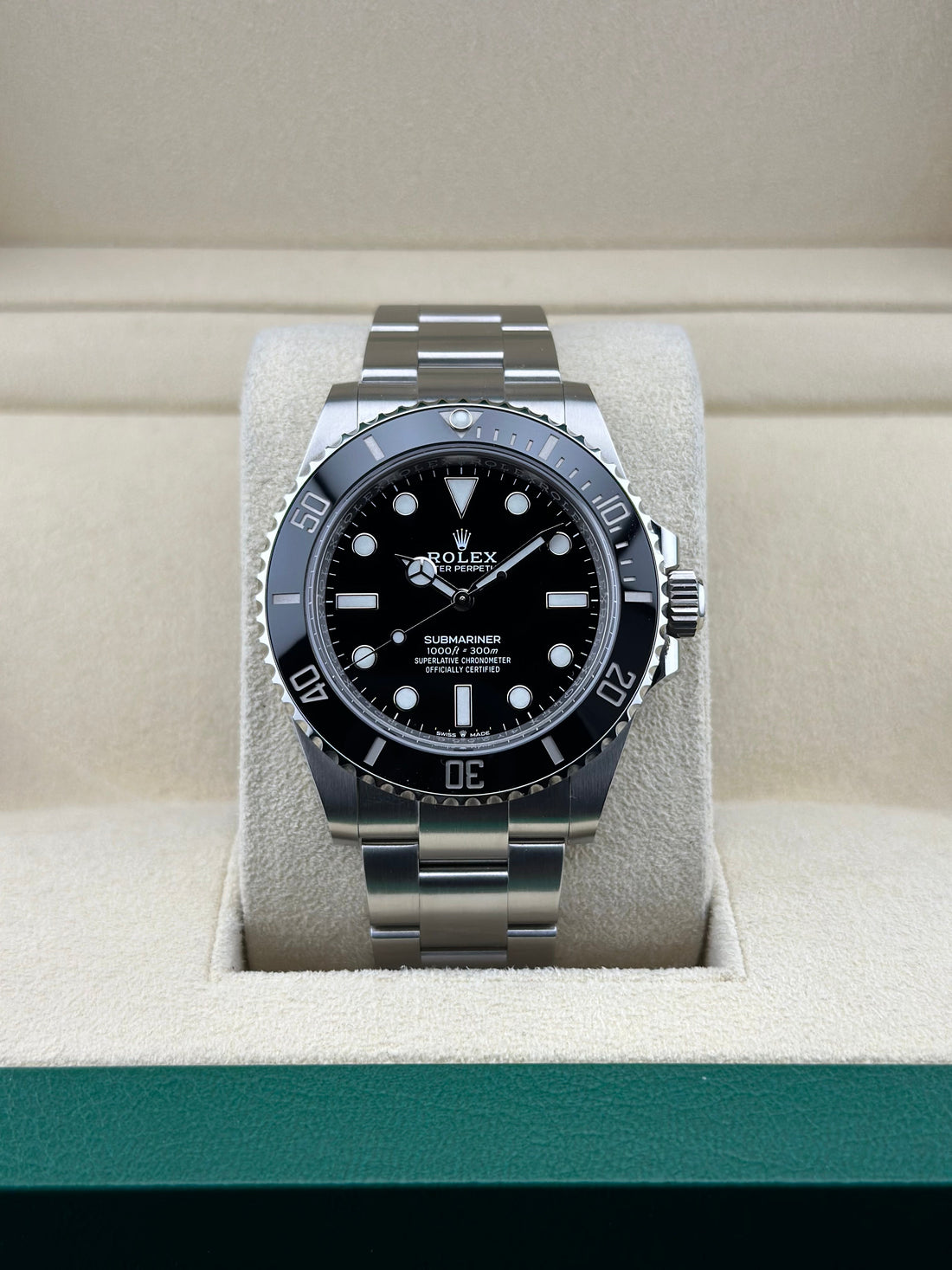
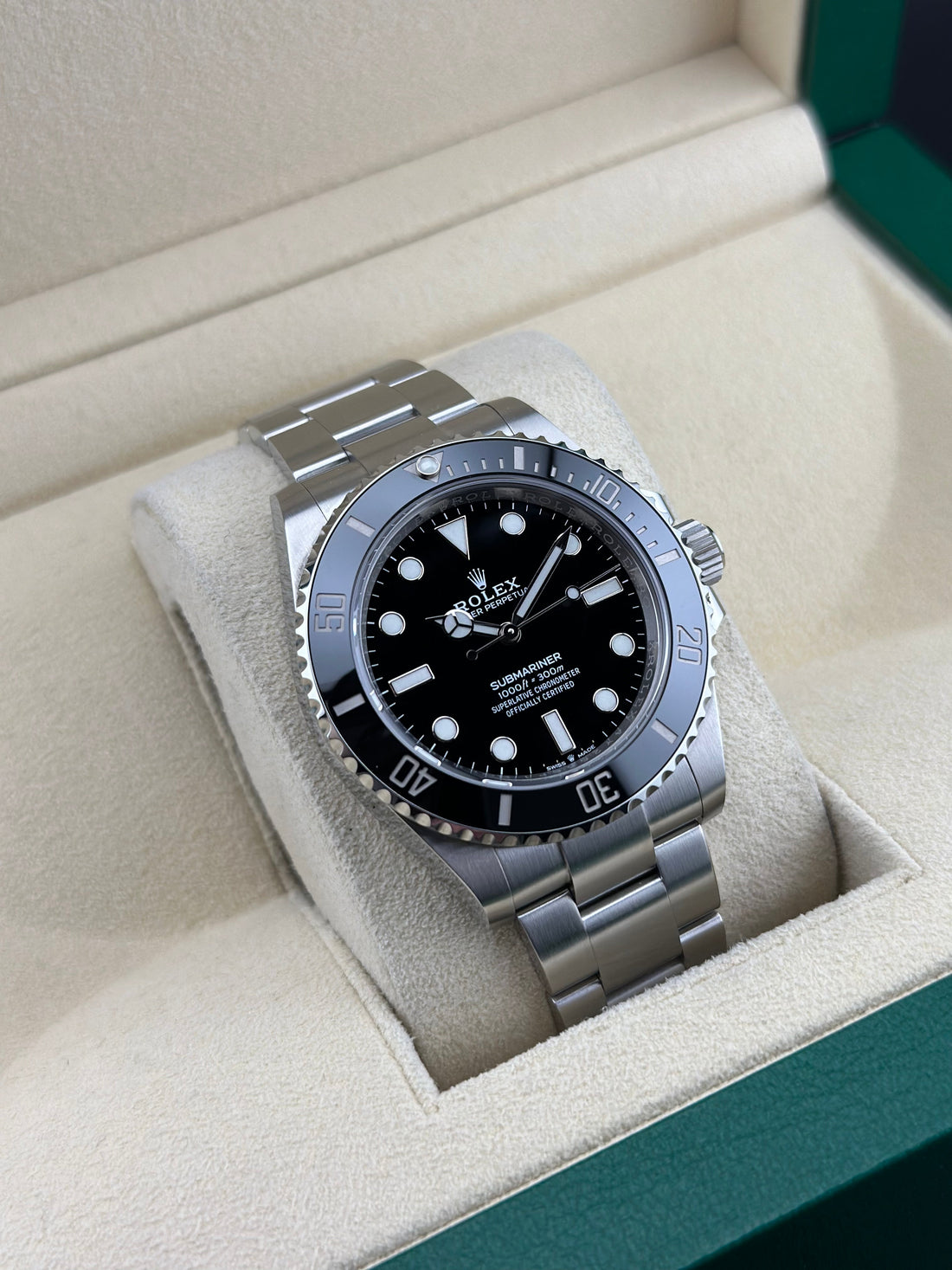
8. Rolex Submariner
The Submariner sits firmly at the sportier end. Its current case measures 41mm, up from the classic 40mm of earlier generations, and that extra millimetre makes a real difference on a smaller wrist. Even so, its appeal has not faded, and it remains one of the most recognised luxury sports watches ever made.
Consider it if you want a sturdy everyday timepiece, a proven collector favourite, a watch built for regular wear, and genuine diving heritage. If 41mm feels like too much, a 36mm Oyster Perpetual or a Datejust 36 gives you a more balanced alternative.
Price guide: the no-date Submariner retails from about $9,100 and the Submariner Date from roughly $10,100, with clean modern examples trading between $10,000 and $15,000 or more on the secondary market.
Takeaway: an icon, but check the 41mm case on your own wrist before committing.
9. Rolex Land-Dweller 36 and 40
A current buying guide has to include the Land-Dweller, released in 2025. Its 36mm and 40mm cases give buyers a modern Rolex that steps outside the traditional sizing conventions.
The collection includes both sizes in materials ranging from Oystersteel and white gold to precious metals and platinum. Its integrated-bracelet design sets it apart visually from an Oyster-bracelet sports model. The 36mm reads as compact and refined, while the 40mm gives more presence, another reminder that diameter is only one part of how a watch wears.
Price guide: at launch, the steel Land-Dweller 36 retails around $14,500 and the steel 40 around $15,400, with precious-metal versions costing significantly more. As a new release in high demand, prices are still settling.
Recommended for:
-
Contemporary Rolex buyers
-
Integrated-bracelet enthusiasts
-
Collectors looking beyond the classic silhouettes
-
Buyers weighing 36mm against 40mm
Takeaway: the newest way to get a modern, size-flexible Rolex with a distinct design language.
Ready to see what is available right now? Browse the current Datejust watches in stock to compare dials, bezels, and bracelet options side by side.
Unisex Rolex Models at a gGlance
|
Model |
Case sizes |
Common materials |
Best for |
Approx. price (from) |
|---|---|---|---|---|
|
Datejust 31 / 36 |
31mm, 36mm |
Oystersteel, Rolesor, gold |
Everyday dress-and-casual wear |
$7,500 retail |
|
Oyster Perpetual 31 / 34 / 36 |
31mm, 34mm, 36mm |
Oystersteel |
Minimalist, first Rolex |
$6,300 retail |
|
Day-Date 36 |
36mm |
Gold, platinum |
Formal, precious-metal luxury |
$40,200 retail |
|
Yacht-Master 37 |
37mm |
Rolesium, two-tone, gold |
Compact sports-luxury |
$12,500 retail |
|
Yacht-Master 40 |
40mm |
Rolesium, two-tone, gold |
Stronger sports presence |
$13,200 retail |
|
Cosmograph Daytona |
40mm |
Steel, gold, platinum |
Chronograph, collecting |
$16,100 retail |
|
GMT-Master II |
40mm |
Steel, Rolesor, gold |
Travel and complications |
$10,700 retail |
|
Submariner |
41mm |
Steel, Rolesor, gold |
Dive heritage, daily wear |
$9,100 retail |
|
Land-Dweller 36 / 40 |
36mm, 40mm |
Oystersteel, gold, platinum |
Modern integrated-bracelet design |
$14,500 retail |
NOTE: Prices are approximate USD figures for 2025-2026 and vary by configuration, availability, and whether a watch is new or pre-owned.
How to Measure Your Wrist for the Right Rolex Size
The single most useful thing you can do before buying is measure your wrist. Wrap a soft tape measure (or a strip of paper you then measure against a ruler) around the widest part of your wrist, just below the bone, and note the circumference.
|
Wrist circumference |
Suggested Rolex case size |
|---|---|
|
5.5 to 6.0 inches (14 to 15.2 cm) |
28mm to 31mm |
|
6.0 to 6.5 inches (15.2 to 16.5 cm) |
31mm to 36mm |
|
6.5 to 7.0 inches (16.5 to 17.8 cm) |
36mm to 40mm |
|
7.0 to 7.5 inches (17.8 to 19 cm) |
40mm to 41mm |
|
7.5 inches and up (19 cm and up) |
41mm and larger |
Treat these as guidance, not gospel. Lug-to-lug length matters as much as diameter, because long lugs can make a small case overhang a narrow wrist. When you can, try a watch on before you commit, or ask a specialist to check the fit for you.
Rolex Bracelet and Material Glossary
A few terms come up constantly when comparing Rolex references. Knowing them makes the specs far easier to read.
-
Oystersteel: Rolex's proprietary 904L-grade stainless steel, chosen for corrosion resistance and a bright polish.
-
Rolesor: Rolex's name for a combination of steel and gold in the same watch, available in yellow, white, or Everose (rose) gold.
-
Everose gold: Rolex's patented pink-gold alloy, engineered to hold its warm colour over time.
-
Oyster bracelet: a three-piece-link bracelet, flat and sporty, the most robust of the three.
-
Jubilee bracelet: a five-piece-link bracelet made for the Datejust's 1945 launch, dressier and more supple.
-
President bracelet: a semi-circular three-piece-link bracelet created in 1956 for the Day-Date, made only in precious metals.
-
Cyclops lens: the magnifying bubble over the date window that Rolex introduced in the 1950s.
-
Perpetual movement: Rolex's self-winding mechanical movement, wound by the motion of your wrist.
-
Superlative Chronometer: Rolex's precision certification, guaranteeing accuracy of minus 2 to plus 2 seconds per day after casing. You can see it listed on any official spec sheet, such as the Datejust 36 in Oystersteel and white gold.
Are Unisex Rolex Watches a Good Investment?
Buy a Rolex to wear and enjoy first. If long-term value also matters to you, look past the "unisex" framing and focus on the things that actually drive desirability: reference number, production period, condition, originality, box and papers, dial configuration, material, rarity, historical significance, and market demand.
Some sports models have developed strong followings, and secondary-market trackers such as Bob's Watches and WatchCharts show why. Steel Daytona references regularly trade well above their roughly $16,100 retail price, often in the $19,000 to $35,000 range and higher for rare examples.
The Submariner and GMT-Master II are consistently cited among the most liquid and steady performers, and even the steel Yacht-Master holds strong resale value. Classic dress families like the Datejust, Day-Date, and Oyster Perpetual appeal to buyers less for speculation and more for timeless proportions and everyday adaptability.
It is worth remembering that Rolex raised retail prices across much of the range in 2025, which continues to influence both new and pre-owned pricing. Still, the most valuable watch for you is not always the one with the highest resale figure. A piece that fits your wrist, your collection, and your life is the one most likely to feel like money well spent.
Not sure which direction suits you? Book an appointment with a specialist to talk through sizing, budget, and long-term value before you buy.
Buying a Unisex Rolex with Confidence
Once you have narrowed down the size and the model, slow down. Before you pay, verify the details that separate an attractive listing from a sound purchase:
-
The exact reference number
-
Case diameter
-
Case and bracelet condition
-
Dial originality
-
Movement information
-
Serial and reference details where applicable
-
Box and papers
-
Service history when available
-
Seller reputation
-
Warranty and return terms
Details matter most with a pre-owned Rolex, because two watches that look nearly identical can carry very different values based on configuration, provenance, originality, and condition. If you are comparing options, it helps to browse the full Rolex collection from a seller that documents each piece.
Frequently Asked Questions
1. What is the most recommended unisex Rolex size?
The 36mm case is the most widely recommended unisex size. It carries enough presence to feel substantial while staying compact enough to suit a wide range of wrists. The Datejust 36 and Oyster Perpetual 36 are the two most popular examples.
2. Can a man wear a 31mm or 36mm Rolex?
Yes. Case size is a matter of proportion and taste, not gender. Plenty of men wear a 36mm Datejust or Oyster Perpetual, and 31mm can suit a slimmer wrist or anyone who prefers a smaller, more discreet watch.
3. Is the Datejust considered unisex?
The Datejust is one of the most naturally considered unisex Rolex families. It comes in 31mm, 36mm, and 41mm cases with a huge choice of dials, bezels, and bracelets, so it adapts easily to different wrists and styles.
4. What is the best Rolex for small wrists?
For smaller wrists, look at the Oyster Perpetual 31 or 34, the Datejust 31, the Day-Date 36, or the Yacht-Master 37. The lug-to-lug length and bracelet width matter as much as the case diameter, so try one on if you can.
5. How do I know my Rolex size?
Measure your wrist circumference just below the wrist bone, then match it to a size chart. Wrists around 6.0 to 6.5 inches tend to suit 31mm to 36mm cases, while 6.5 to 7.0 inches suits 36mm to 40mm. Trying the watch on remains the most reliable check.
6. Which unisex Rolex holds its value best?
Steel sports models such as the Daytona, Submariner, and GMT-Master II have historically shown the strongest and most consistent secondary-market demand. Classic dress models like the Datejust and Day-Date hold value steadily thanks to their timeless design.
7. Are new or pre-owned unisex Rolex watches the better buy?
It depends on the model. Many popular sports references are hard to buy new at retail because of limited allocation, so the pre-owned market is often the faster route. For dress models, pre-owned examples can offer strong value, sometimes below original retail. Always verify condition, originality, and paperwork.
8. What size Rolex is best for couples who want to share styles?
The Datejust 36 and Oyster Perpetual 36 are common choices for couples, since 36mm reads well on most wrists. Some pairs choose the same family in two sizes, such as a Datejust 31 and a Datejust 36, for a matched but personalised look.
Let Music City Timepieces Help with Your Search
Still deciding between a Datejust 31, Datejust 36, Oyster Perpetual 36, Yacht-Master 37, Daytona, GMT-Master II, or another Swiss timepiece? Talking to a specialist before you commit can save you time and money.
Music City Timepieces specialises in premium Swiss watches and keeps a curated inventory across brands including Rolex, Audemars Piguet, Omega, Patek Philippe, Tudor, and IWC. Every watch is inspected, and the inventory is updated frequently. For buyers who already know the reference they want, and for those who still need help finding the right size, the team also offers appointment-based guidance and watch-sourcing.